
Where to Go in Morocco by 4x4 Depending on the Season
Morocco is a particularly diverse playground for off-road driving enthusiasts. In just a few days, an itinerary can take you across mountain passes, pre-Saharan valleys, rocky tracks and the vast sandy landscapes of the Sahara.
However, different regions offer very different experiences depending on the time of year. Temperatures, weather conditions and track conditions all influence the choice of route, the stages and the type of adventure you can plan.
So, where should you go in Morocco in spring, summer, autumn or winter? Which regions are best suited to a 4x4 adventure, and how can you adapt your itinerary to the season?

🌿 Spring: From the Atlas Mountains to the Sahara
Spring is a great time to cross Morocco’s mountain regions and gradually make your way towards the desert. Temperatures are generally more comfortable than in summer, although snow can still affect some High Atlas passes early in the season.
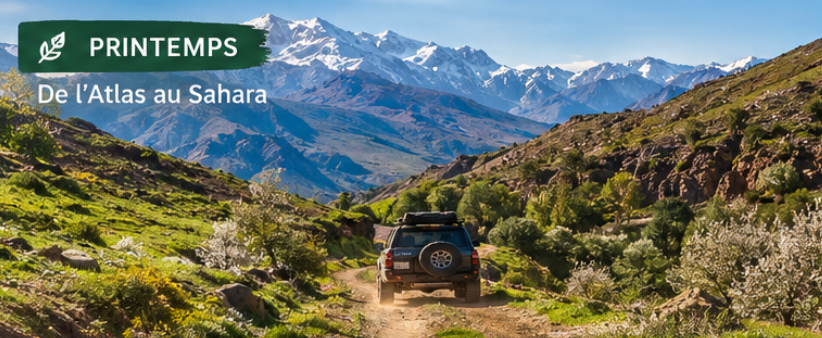
1. The High Atlas: Mountain Passes and Panoramic Views
From Marrakech, crossing the High Atlas is a first stage offering a remarkable variety of terrain. Mountain roads, off-road tracks and valleys lead through rugged landscapes, traditional villages and high-altitude plateaus. The choice of routes should always be adapted to the weather and the actual condition of the tracks.
2. The Southern Valleys and the Draa Valley
As you head south, the landscape gradually changes into pre-Saharan valleys, palm groves and arid open spaces.From Zagora to the Draa Valley, tracks and remote villages offer a glimpse of a quieter, more secluded side of Morocco, far beyond the classic tourist routes.
3. The Sahara: Learning to Drive on Sand
Driving through the dunes requires a specific approach. Reading the terrain, choosing the right line and adapting to changing conditions are all essential skills.At AllMoov, the aim is to provide a genuine off-road driving experience, with a focus on understanding the terrain and learning how to handle a 4x4 in real conditions.
☀️ Summer: Focus on the Mountains and Atlantic Coast
High temperatures can make long stages in southern Morocco and the desert more demanding. The choice of regions, routes and driving times should therefore be adapted to the temperatures and local conditions.

The High Atlas and Higher-Altitude Areas
Mountain regions can offer an alternative to the intense heat of the plains and desert. However, conditions still depend on the weather, altitude and accessibility of the tracks.
The Atlantic Coast: A Different Kind of Adventure
From Essaouira to Agadir, via Mirleft, the coastline offers landscapes very different from those found inland.The influence of the Atlantic Ocean generally brings milder temperatures. An itinerary can combine coastal exploration, accessible off-road tracks and stages adapted to local conditions.
🍂 Autumn: Exploring Southern Morocco
Autumn is a particularly interesting time to explore Morocco’s desert regions, with temperatures generally more moderate than in summer.

From Marrakech to the Pre-Saharan Valleys
A 4x4 adventure can begin with a crossing of the High Atlas before heading towards the southern valleys, rocky tracks and desert landscapes.
The Zagora region and the Draa Valley offer the opportunity to take time to discover the landscapes and territories along the way, rather than focusing solely on reaching the final destination.
The Sahara Dunes
Autumn generally offers favorable conditions for driving in the dunes. However, sand always comes with its own challenges.
With AllMoov, participants drive their own 4x4 and receive guidance throughout the journey.
You don’t just come to discover the desert — you also come to learn how to drive in it.
❄️ Winter: Adapt the Route
Winter is a great time to explore Morocco’s southern regions and the Sahara, but mountain conditions require particular attention. Snow, cold temperatures and changing weather conditions can affect some mountain passes and tracks, making route planning and flexibility essential.

The High Atlas: Mountain Passes to Watch
Snow, ice and track conditions can make some crossings more challenging. The route should remain flexible and be adapted to the prevailing weather conditions.
The Southern Valleys and the Sahara
Pre-Saharan valleys, rocky tracks and desert landscapes offer alternatives to mountainous areas.
Temperatures can still vary considerably, with cold nights in the Sahara. Daily stages should therefore take driving conditions and temperature variations into account.
The Atlantic Coast
The Atlantic coast can also be incorporated into a winter itinerary. Essaouira, Agadir and Mirleft offer a different way to experience Morocco, complementing a route through the southern regions.
So, When Is the Best Time to Go to Morocco by 4x4?
If you want to explore the desert, mountains and tracks of southern Morocco in comfortable conditions, spring and autumn generally offer the most balanced conditions.
But there is no single best season for discovering Morocco.
Each time of year offers a different type of adventure, provided you adapt your route to the weather conditions and the regions you are travelling through.
From Marrakech to the Sahara and along the Atlantic coast, your 4x4 adventure can be tailored to your schedule, your interests and your level of experience.


Comments